
Artificial intelligence is already reshaping how people search, shop, and make decisions online. Now, the next major shift in digital advertising is approaching: ChatGPT ads. As conversational AI platforms move toward monetization, marketers and business owners are beginning to ask a critical question, what will ads in ChatGPT look like, and how will they change paid media as we know it?
While OpenAI has not yet launched a full advertising platform inside ChatGPT, industry signals strongly suggest that some form of paid placement or sponsored responses is inevitable. With hundreds of millions of users and growing enterprise adoption, ChatGPT represents a new type of discovery environment, one that is intent-driven, conversational, and highly contextual.
For businesses across SaaS, ecommerce, real estate, healthcare, professional services, and beyond, this shift presents both opportunity and risk. Those who prepare early will be best positioned to benefit.
Why Ads in ChatGPT Are Inevitable
Running a global AI system at scale requires enormous infrastructure and computing resources. While subscription plans help offset some of those costs, advertising remains one of the most proven long-term monetization models for platforms with massive recurring engagement. That matters here because ChatGPT has reached true mass adoption: according to a 2025 research paper released by OpenAI researchers and economist David Deming, ChatGPT had grown to more than 750 million weekly active users by mid-2025, representing nearly 10 percent of the world’s population using it at least once per week. When a platform reaches that scale, advertising typically follows not as an add-on, but as a natural next layer of monetization and discovery.
More importantly, ChatGPT already plays a role in commercial decision-making. Users ask questions such as:
- “What’s the best accounting software for small businesses in Canada?”
- “Which CRM should I use for a growing SaaS company?”
- “What’s a good mortgage broker in Toronto?”
- “What project management tool should my team use?”
These are high-intent queries. From a marketing perspective, they are comparable to bottom-of-funnel Google searches. That alone makes ChatGPT a powerful candidate for paid placements or sponsored recommendations.
What ChatGPT Ads Might Actually Look Like
Although no official product has been released yet, most experts expect ads in ChatGPT to differ significantly from traditional display or search ads.
Instead of banners or text ads stacked on a results page, ChatGPT ads will likely be:
- Contextual: Triggered by user intent, industry, or problem type
- Native: Embedded into conversational responses rather than visually separated
- Recommendation-based: Positioned as “sponsored suggestions” or “promoted solutions”
- Highly targeted: Based on query meaning, not just keywords
For example, a user asking about email marketing platforms could receive a response like:
“Here are three leading email marketing tools for growing businesses. One of them is a sponsored recommendation.”
This format is less intrusive and far more aligned with how people already use AI tools for research and decision-making.
What OpenAI Has Already Confirmed About Ads in ChatGPT
OpenAI has stated that its advertising approach is designed to support its broader mission of making advanced AI widely accessible, rather than maximizing short-term revenue. Advertising is being positioned as a way to help fund large-scale AI infrastructure while keeping core AI tools affordable or free for users.
Several foundational guardrails have already been defined:
- Ads will not influence answers.
OpenAI has explicitly stated that sponsored content will not affect how ChatGPT generates responses. Answers will continue to be optimized based on what is most helpful to the user, not on advertising relationships. Ads will be displayed separately and clearly labeled as sponsored. - User conversations will remain private.
Advertisers will not have access to ChatGPT conversation data, and OpenAI has committed to never selling user data to advertisers. Ad targeting will rely on high-level contextual relevance rather than personal conversation history. - Users will retain control over personalization.
People will be able to turn off ad personalization and clear the data used for ad relevance at any time. OpenAI has also stated that there will always be a way to use ChatGPT without ads, including through paid, ad-free subscription tiers. - User experience takes priority over engagement metrics.
Unlike traditional ad platforms that optimize heavily for time on site or engagement, OpenAI has said it does not intend to optimize ChatGPT for time spent. The platform’s stated priority is long-term trust, usefulness, and experience quality over ad revenue.
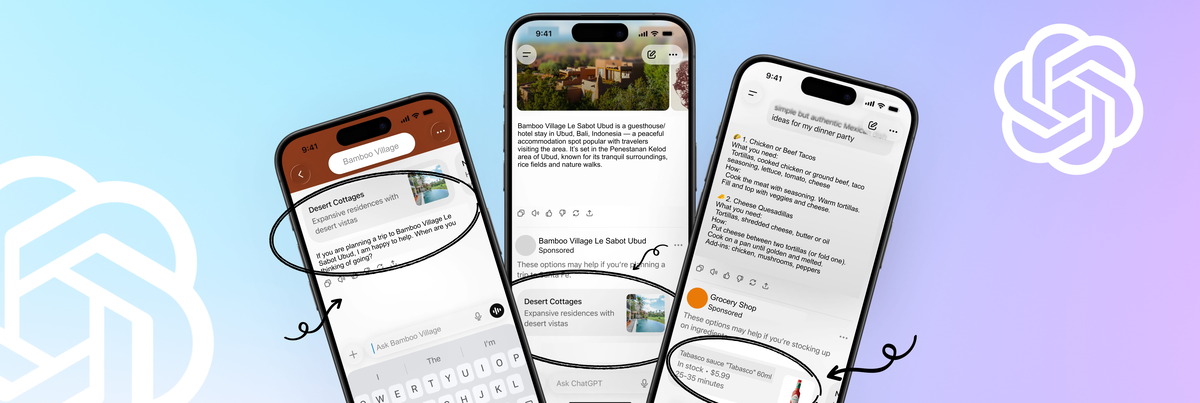
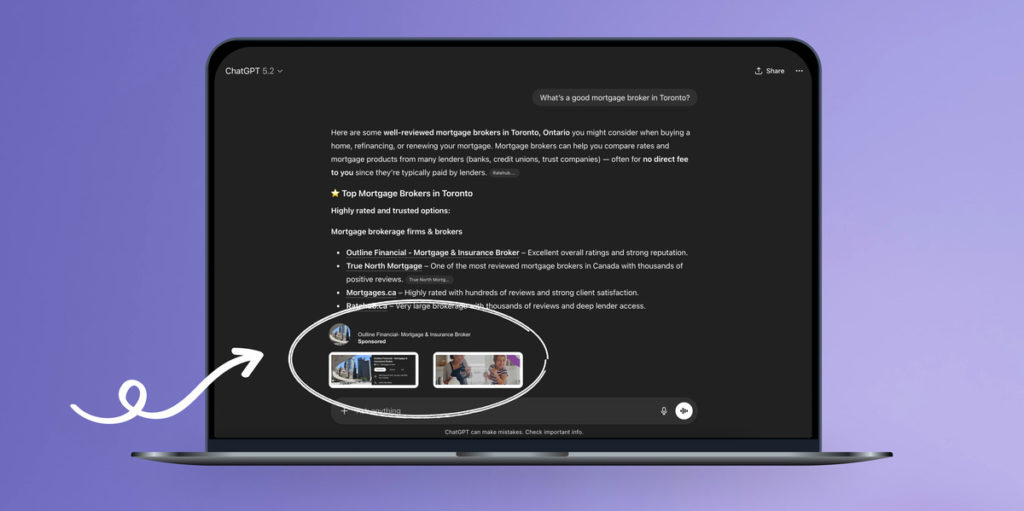
To start, advertising will be introduced only for logged-in adult users in the United States on free and entry-level paid tiers. Ads will appear at the bottom of ChatGPT responses when a relevant sponsored product or service aligns with the user’s current conversation. Sponsored placements will be visually separated from organic answers and clearly labeled.
How the first tests will work
- Who: Logged-in adults in the U.S., on Free and entry-level paid tiers.
- Where ads show: At the bottom of answers, only when a sponsored product or service is relevant to the current conversation.
- User actions: You can see why you’re seeing an ad, dismiss it, and share feedback.
- Safety limits: No ads for under-18 users, and no ads near sensitive or regulated topics like health, mental health, or politics.
ChatGPT Ads vs Google Ads: What Will Be Different?
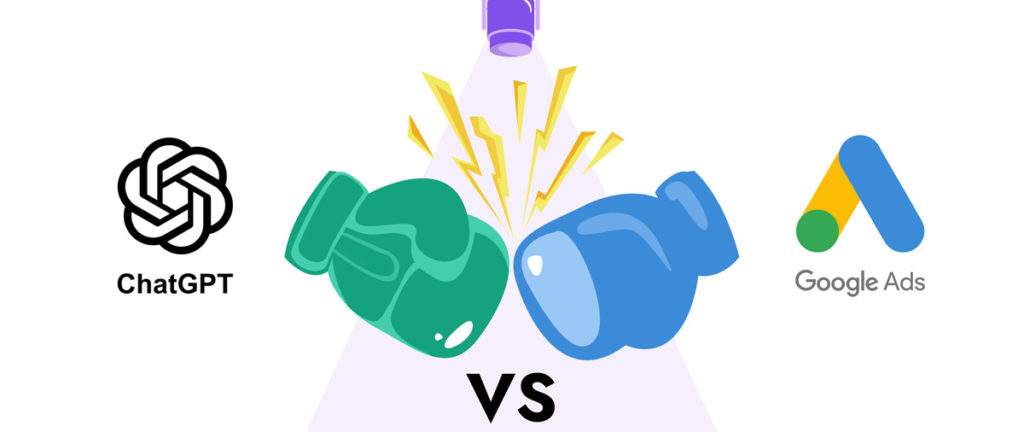
The inevitable comparison is ChatGPT ads vs Google ads. While both serve commercial intent, they operate in fundamentally different environments.
- Keyword Search vs Intent Interpretation
Google Ads relies heavily on keyword matching. ChatGPT interprets meaning, context, and user goals. This enables far more nuanced targeting.
- Search Results vs Conversations
Google shows multiple ads and organic listings. ChatGPT typically delivers one consolidated answer. That makes placement scarcer but potentially more powerful.
- Transactional vs Advisory Experience
Google search is transactional. ChatGPT is advisory. Users treat it like a knowledgeable assistant, which means sponsored content must be extremely relevant and helpful to maintain trust.
- Click-Driven vs Influence-Driven
Google Ads is optimized for clicks. ChatGPT ads may be optimized more for influence, brand lift, and downstream conversion actions.
Rather than replacing Google Ads, ChatGPT ads will likely complement them as a new channel for high-intent, mid- to late-funnel users.
How Different Industries Could Benefit
One of the most compelling aspects of ChatGPT ads is how broadly they apply across industries.
SaaS and B2B Technology
SaaS buyers already rely heavily on research before purchasing. ChatGPT ads could surface tools for CRM, HR software, accounting, project management, cybersecurity, and marketing automation at exactly the moment buyers are comparing options.
This creates new opportunities for:
- Growing your SaaS business
- Promoting freemium trials
- Driving demo bookings
- Positioning product differentiation clearly
Ecommerce and Consumer Brands
Product discovery through conversational AI opens a new frontier for ecommerce. Instead of browsing dozens of listings, users may simply ask:
- “What’s the best espresso machine under $1,000?”
- “Which skincare brand is good for sensitive skin?”
Ads in ChatGPT could surface sponsored product recommendations tied to reviews, features, and user needs.
Real Estate and Financial Services
From mortgage brokers to realtors to investment advisors, many services depend on trust and expertise. ChatGPT ads could position professionals and firms as credible options when users seek guidance.
Healthcare and Wellness
Clinics, telehealth platforms, wellness brands, and insurance providers could appear in AI-driven research journeys where accuracy and credibility matter most.
Professional Services
Law firms, accounting firms, marketing agencies, and consultants could benefit from being suggested when users ask about solutions to specific business or legal problems.
Why Data Infrastructure Will Matter More Than Ever
When ChatGPT ads arrive, businesses will not be managing just Google Ads and Meta Ads anymore. They will be operating in a multi-AI-channel world.
That creates a growing need to:
- Build a custom SAAS dashboard to track performance across channels
- Consolidate attribution data
- Monitor cost per lead and conversion paths
- Compare ChatGPT ads vs Google ads ROI
- Identify assisted conversions driven by AI platforms
For growth-focused companies, especially in SaaS, this also ties into:
- Growing your SaaS business sustainably
- Improving lifecycle marketing
- Increasing LTV to CAC ratios
- Making smarter budget allocation decisions
Why Your Website Experience Will Still Make or Break Results
Even if ads in ChatGPT generate high-quality traffic, success will still depend on what happens after the click.
That makes web and web application design and development more important than ever.
High-converting AI-driven traffic requires:
- Fast page speed
- Clear messaging aligned with conversational intent
- Trust indicators and social proof
- Strong calls to action
- Conversion-focused UX flows
- Seamless mobile experience
For SaaS companies in particular, your onboarding flow, demo booking experience, and trial activation process will determine whether you can truly grow sales with a SAAS platform.
How Marketers Should Start Preparing Now
Even before ChatGPT ads officially launch, there are practical steps businesses can take today.
- Strengthen Your Brand Authority
AI systems prioritize trusted sources. Build strong content, reviews, and authority signals.
- Invest in Conversion Optimization
Improve landing pages, forms, funnels, and user journeys.
- Build a Data Foundation
Start planning how you will track new ad channels. A custom SaaS dashboard can future-proof your reporting.
- Clarify Your Value Proposition
AI platforms reward clarity. Make your differentiation obvious and compelling.
- Prepare Your Marketing Stack
Ensure your CRM, analytics, and attribution tools can support new traffic sources.
The Bigger Picture: A Shift, Not a Replacement
ChatGPT ads will not replace Google Ads. Instead, they will become a new layer in the paid media ecosystem.
Just as TikTok Ads, Amazon Ads, and LinkedIn Ads created new opportunities without eliminating search advertising, ChatGPT ads will add a powerful new discovery channel, especially for complex, high-consideration products and services.
For marketers, this is not about abandoning existing platforms. It is about expanding intelligently.
Businesses that prepare early, by strengthening their digital foundations, investing in AI-ready marketing infrastructure, and refining their conversion experiences, will gain a meaningful competitive advantage.
If you want expert guidance on adapting your advertising strategy, analytics stack, or website experience for emerging AI platforms, Digilite can help you prepare for what’s coming next.