
Construction has always been a hands-on industry. Projects move forward through planning, coordination, budgeting, communication, and fast decision-making on-site. But while the work itself happens in the real world, the systems that support it no longer need to rely on spreadsheets, scattered emails, paper forms, and delayed updates.
Today, construction digital transformation is helping companies work smarter, not harder. From project tracking and team communication to budgeting, reporting, and client updates, web apps are changing the way contractors, builders, developers, and project managers run jobs from start to finish.
At Digilite, we help businesses move beyond outdated processes by building practical, scalable digital solutions. Through web application design and development, mobile app design and development, AI solutions, and full web design and development, we create systems that support real business operations, including the demands of the construction industry.
This blog explains how web apps improve construction management and how companies can use them to work more efficiently, reduce delays, and achieve better results.
Why Traditional Construction Management Methods Fall Short
Construction projects encompass numerous dynamic elements. Teams need to manage timelines, vendors, subcontractors, permits, materials, inspections, safety records, change orders, invoices, and client communication. When that information lives in different places, problems happen quickly.
A site manager may be using one spreadsheet. The office team may be tracking costs in another system. Subcontractors may send updates by text. Clients may be waiting for answers buried in email threads. This creates confusion, duplicated work, avoidable mistakes, and delays that affect the entire project.
This is exactly why more companies are asking how to streamline construction workflows with technology. A strong digital system creates one source of truth, so everyone works with the same information.
How Web Apps Improve Construction Management
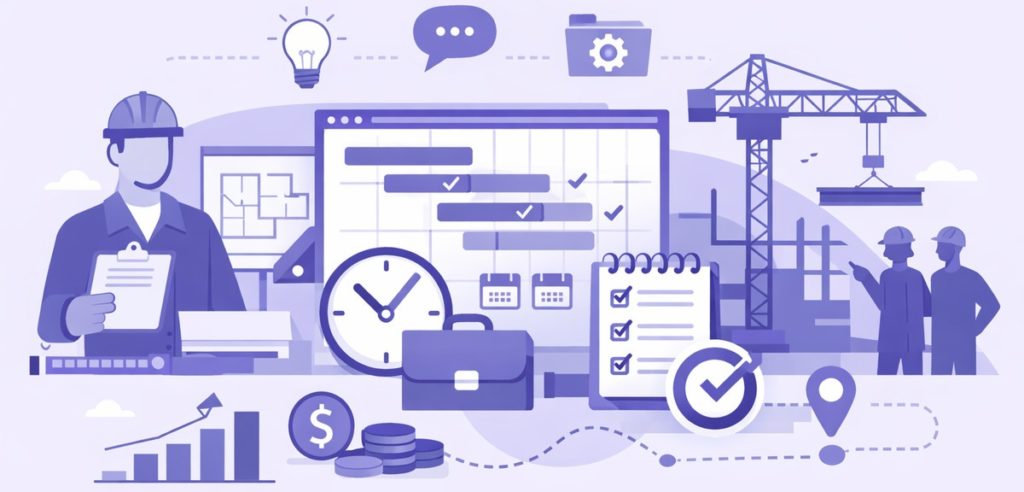
When people ask how web apps improve construction management, the answer is simple: they connect people, processes, and data in one place.
A custom web app can be built around the way a construction company actually works. Instead of forcing a team to adapt to generic tools, the system can reflect specific workflows, roles, approvals, reporting structures, and field operations.
For example, a web app for construction management can help teams:
- Assign and track tasks across departments
- Monitor project milestones and deadlines
- Store permits, contracts, and documents centrally
- Manage change orders and approvals
- Track budgets, invoices, and procurement
- Update site progress in real time
- Connect field staff with office teams
- Reduce manual entry and duplicate records
- Improve accountability across the project lifecycle
This is one of the major benefits of digital tools in construction projects. Instead of reacting to problems after they happen, teams can identify issues sooner and respond faster.
The Real Benefits of Digital Tools in Construction Projects
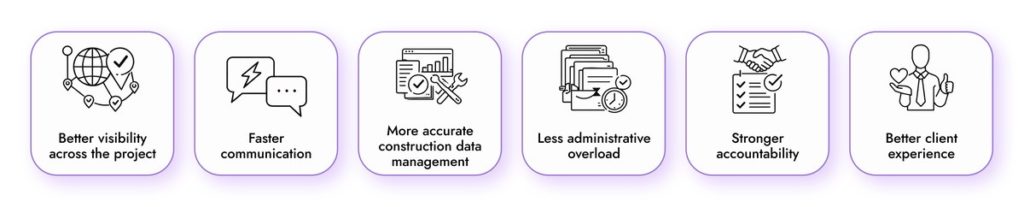
The benefits of digital tools in construction projects go far beyond convenience. They directly impact efficiency, communication, profitability, and client satisfaction.
Better visibility across the project
With digital dashboards and centralized records, project managers can quickly see what is happening across one site or several active jobs. They do not need to chase updates from multiple people or piece information together manually.
Faster communication
A web app gives teams a shared platform where updates, comments, documents, and task statuses are visible in real time. This helps avoid missed instructions and keeps office and field teams aligned.
More accurate construction data management
Strong construction data management is essential. When data is incomplete, outdated, or scattered, decisions become harder. A custom app helps companies organize estimates, schedules, budgets, revisions, inspection records, and internal reports in a structured way.
Less administrative overload
Manual reporting takes time. So does collecting timesheets, updating progress trackers, and re-entering data from paper forms. Digital systems reduce repetitive work and support automation in construction industry workflows.
Stronger accountability
When tasks, approvals, and updates are logged inside a system, there is more clarity around responsibility. That helps reduce confusion and creates better follow-through.
Better client experience
Clients want transparency. A digital portal or project dashboard can help them view progress, documents, milestones, and updates without waiting for back-and-forth communication.
Cloud-Based Tools for Construction Project Tracking
One of the biggest advances in the industry is the rise of cloud-based tools for construction project tracking. These tools allow teams to access live information from anywhere, whether they are in the office, on-site, at a supplier meeting, or traveling between projects.
Cloud-based systems are especially useful for construction businesses because work rarely happens in one fixed location. Site supervisors, estimators, project managers, and company leadership all need access to current information.
With cloud-based tools for construction project tracking, companies can:
- Monitor timelines in real time
- Upload site photos and field notes instantly
- Review project documents from any device
- Approve requests without delay
- Maintain version control for important files
- Reduce reliance on paper-based reporting
This improves operational speed and supports better decision-making across the business.
How Construction Companies Use Web Apps to Improve Efficiency
There is no single way construction firms adopt technology. The best solutions depend on the company’s size, service model, and internal processes. Still, there are common examples of how construction companies use web apps to improve efficiency.
- A general contractor may use a custom app to manage subcontractor communication, purchase orders, daily logs, and inspection schedules.
- A renovation company may build a client portal where homeowners can review timelines, approve selections, and track progress.
- A commercial construction firm may need a web platform that combines project planning, team scheduling, internal reporting, and budget monitoring.
- A supplier or specialty trade company may use mobile tools to manage technician dispatch, material delivery tracking, and field updates.
The point is not just to digitize paperwork. The goal is to create modern construction management solutions for contractors that match real operations and remove friction from daily work.
Mobile Construction Apps for Field Teams
Desktop access alone is not enough in construction. Teams in the field need fast, reliable tools they can use on the go. That is why mobile construction apps have become so valuable.
A mobile app can allow site teams to:
- Submit daily reports
- Upload photos and videos from the jobsite
- Log safety checks
- Record punch list items
- Request approvals
- Update task progress
- Access drawings or documents on site
This is where mobile app design and development become important. The app must be easy to use in real job conditions. That means clean navigation, simple forms, fast load speed, and strong usability even when teams are under pressure.
At Digilite, we build digital tools with actual users in mind. A field worker, superintendent, or project coordinator should be able to open the app and complete what they need without friction.
Collaboration Tools for Construction Teams
Construction projects require coordination between many stakeholders. Internal staff, subcontractors, vendors, consultants, and clients often need to work together under tight timelines. This is why collaboration tools for construction teams matter so much.
A well-designed web app can improve collaboration by giving everyone appropriate access to the information they need. Rather than sending documents back and forth or relying on disconnected chat threads, teams can communicate within one structured system.
Useful collaboration features may include:
- Role-based access
- Shared task boards
- File and document sharing
- Comment threads on tasks or records
- Approval workflows
- Alerts and notifications
- Project calendars
- Milestone tracking
This leads to faster decisions and better coordination, especially on larger or more complex projects.
Automation in Construction Industry Workflows

One of the most practical gains from digital systems is automation in construction industry operations. Construction companies often repeat the same manual tasks across every project. That includes generating reports, following up on approvals, assigning tasks, updating status records, and organizing documents.
Automation can help with:
- Reminder notifications for deadlines
- Automatic status changes based on workflow stages
- Scheduled reports for managers or clients
- Triggered approvals for change orders
- Form submissions that create new tasks automatically
- Invoice and document routing
- Lead intake and follow-up processes
Automation does not replace human oversight. It removes unnecessary manual steps so teams can focus on higher-value work.
AI Solutions in Construction Management
The industry is also becoming more interested in AI solutions that support planning, forecasting, and operational efficiency. While not every company needs advanced AI right away, there are real opportunities to use AI in practical ways.
Examples include:
- Summarizing project updates
- Identifying patterns in delays or cost overruns
- Helping teams search large document sets quickly
- Supporting predictive maintenance planning
- Improving lead qualification and customer support
- Automating repetitive admin or reporting tasks
For growing construction companies, AI works best when it is tied to a solid digital foundation. Good systems, clean workflows, and organized data make AI far more useful.
Choosing the Best Software for Construction Project Management
Many businesses search for the best software for construction project management, but the real question is whether off-the-shelf software fits the way the business actually operates.
Some companies do well with ready-made platforms. Others outgrow them quickly because they need custom roles, unique workflows, specialized reporting, or better integrations. That is where custom web application design and development become a strong advantage.
A custom solution is especially valuable when a company wants to:
- Connect multiple internal systems
- Support a unique service model
- Improve adoption with a simpler interface
- Build branded client experiences
- Scale operations without patching together too many tools
The right approach is not always to replace every tool. Sometimes it is about creating a central web app that connects your systems and makes them work better together.
Construction Website Development and Business Growth
A strong internal system matters, but so does the public-facing side of the business. Construction website development plays an important role in attracting leads, building trust, and supporting sales.
A contractor’s website should not just look modern. It should work as a business tool. That means clear messaging, strong calls to action, service pages built around real search intent, project showcases, and easy ways for prospects to request quotes or consultations.
This is where Digilite’s broader capabilities matter. We not only build operational platforms, but we also support business growth through the following:
- Web design and development
- Construction website development
- Search engine optimization
- Digital marketing services
- Branding
- PPC advertising
- Social media marketing
- Email marketing
When the customer-facing website and the internal workflow tools are aligned, construction businesses are better positioned to convert leads and manage projects more effectively.
What a Good Web Design Process Looks Like
Technology works best when it is built strategically. A rushed system with poor structure will only create new problems. That is why a thoughtful web design process is essential.
At Digilite, our process starts with understanding the business itself. We look at current workflows, team pain points, customer journeys, reporting needs, and growth goals. Then we define the right structure, features, and user experience.
A good web design process for construction-related platforms often includes:
- Discovery and workflow mapping
- Feature planning
- Wireframing and user experience design
- Interface design
- Development and integrations
- Testing across devices and user roles
- Launch and post-launch improvements
Digi Tip: Always involve your field team early in the process. Their day-to-day input helps build a system that actually works on site, not just in theory.
Why Digilite is a Strong Partner for Construction Companies
Construction businesses do not need digital tools for the sake of appearance. They need systems that solve real problems, reduce inefficiencies, and support growth.
That is why Digilite approaches every project with both strategy and execution in mind. We help businesses create digital ecosystems that connect operations, marketing, and customer experience.
Even for businesses that also sell products or materials online, our team can support broader commerce needs, including Shopify website development and planning the right features for a high-converting Shopify website where relevant. While Shopify may not be the core platform for most construction management systems, it can support product-driven construction businesses that sell tools, materials, accessories, or branded merchandise alongside service offerings.
Construction is a demanding industry, and outdated systems can slow teams down. Digital tools are now essential for improving efficiency, collaboration, and staying competitive.
From project tracking and construction data management to mobile apps, automation, and AI workflows, web apps help reduce delays, improve visibility, and strengthen communication.
The goal is not just to use more tools, but to build the right ones for your business.