![Web Design Process: The Complete Guide to Designing a Successful Website [2026 updated]](https://digilite.ca/wp-content/uploads/2023/04/Web-Design-Process-1920x1080.jpg)
A website is often the first interaction customers have with your business. But creating a successful website involves much more than choosing colours, adding images, and publishing pages.
A strategic web design process combines research, planning, user experience, design, development, testing, and ongoing optimization to create a website that looks professional, supports business goals, and helps convert visitors into customers.
Whether you are building a new website or redesigning an existing one, understanding the website design process helps you make better decisions, avoid costly mistakes, and create a digital experience that supports long-term growth.
In this guide, we’ll walk through the complete process of designing a website, from the first planning stage to launch and continuous improvement.
What Is the Web Design Process?
The web design process is the structured series of steps designers, developers, marketers, and business owners follow to create a functional and user-friendly website.
The process of designing a website includes:
- Understanding business goals
- Researching the target audience
- Planning website structure
- Creating designs and prototypes
- Developing website functionality
- Testing performance and usability
- Launching and maintaining the website
A successful website is not only visually appealing. It needs to provide a smooth user experience, communicate your brand message clearly, perform well on search engines, and guide visitors toward taking action.
What is the First Step in the Web Design Process?
The first step in the web design process is strategy and planning.
Before designers create layouts or developers write code, businesses need to define what they want the website to achieve.
During this stage, the team identifies:
- Website goals
- Target audience
- Main customer challenges
- Required features
- Competitor insights
- SEO and GEO opportunities
- Content requirements
For example, a service-based business may need a website focused on generating leads, while an e-commerce company may prioritize product discovery and checkout experience.
A clear strategy creates the foundation for every following stage of the website design process.
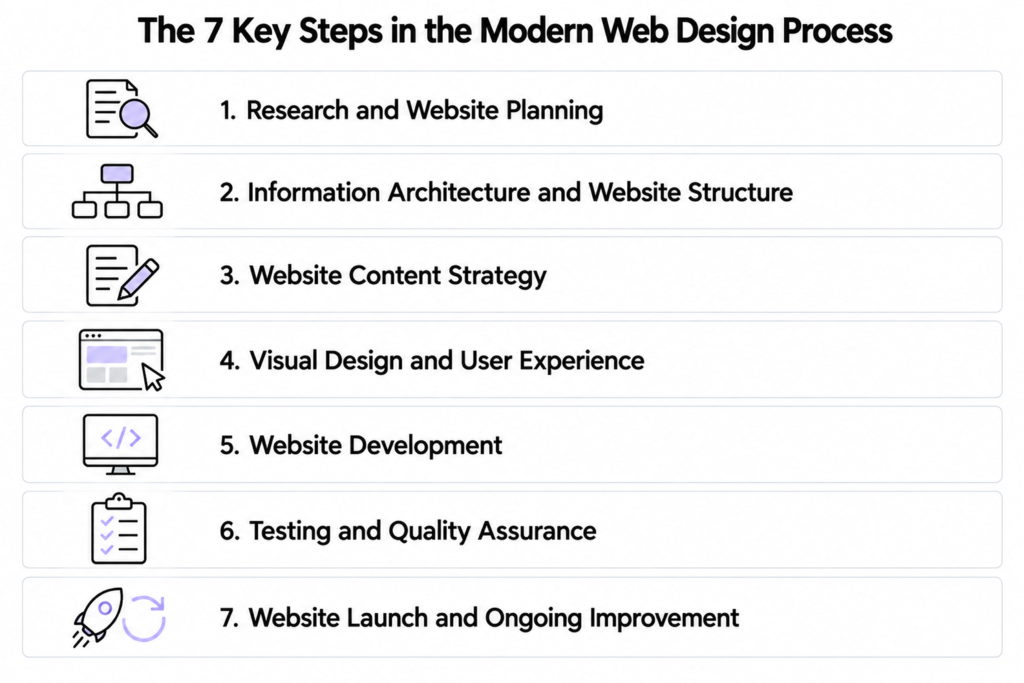
The 7 Key Steps in the Modern Web Design Process
1. Research and Website Planning
The planning stage is the foundation of every successful website.
The team analyzes:
- Your business objectives
- Customer behaviour
- Competitor websites
- Industry trends
- Search opportunities
Keyword research is also an important part of the process of web design because website structure and content should be created around what potential customers are searching for.
For businesses investing in organic growth, combining website planning with search engine optimization helps create a website that is designed for both users and search engines.
2. Information Architecture and Website Structure
The next stage of the website design process focuses on organizing information in a way that makes sense for visitors.
This includes creating:
- Website sitemap
- Navigation structure
- Page hierarchy
- User journeys
- Wireframes
A well-planned structure helps visitors quickly find what they need while helping search engines understand the relationship between pages.
3. Website Content Strategy
Content plays a major role in the modern web design process.
A website should answer customer questions, explain your services, build trust, and encourage visitors to take action.
During this stage, businesses should plan:
- Homepage messaging
- Service pages
- Landing pages
- Blog content
- Calls-to-action
Content should also support emerging search experiences, including AI-powered discovery through strategies such as generative engine optimization.
4. Visual Design and User Experience
The visual design stage transforms strategy into a website interface.
Designers create:
- Page layouts
- Brand elements
- Typography
- Colour systems
- Images
- Interactive elements
The goal is not only to make a website attractive but also to create an experience that feels intuitive.
Good website design helps visitors understand:
- Who you are
- What you offer
- Why they should trust you
- What action they should take next
5. Website Development
Once the design is approved, developers turn the concepts into a functional website.
The development stage includes:
- Front-end development
- Back-end functionality
- CMS setup
- Integrations
- Performance optimization
- Responsive design
Businesses may choose between template-based websites and custom solutions depending on their needs.
At Digilite, our approach focuses on creating websites that support business goals through web design & web development, including user experience planning, custom functionality, and scalable solutions.
For businesses requiring advanced platforms, web application design & development can help create tools that improve operations, customer interactions, and internal workflows.
6. Testing and Quality Assurance
Before launch, every website should go through testing.
Testing includes:
- Mobile responsiveness
- Browser compatibility
- Website speed
- Forms and functionality
- Security checks
- User experience testing
A website that works properly across devices creates a better experience and protects potential conversions.
7. Website Launch and Ongoing Improvement
Launching a website is not the end of the web design process.
After launch, businesses should continue monitoring:
- Website traffic
- User behaviour
- Search rankings
- Conversion rates
- Technical performance
Regular improvements help websites stay competitive as customer expectations and technology change.
Real Digilite Web Design Projects
The impact of digital transformation is best demonstrated through real projects.
Building a Stronger Digital Experience for the Sound Pod
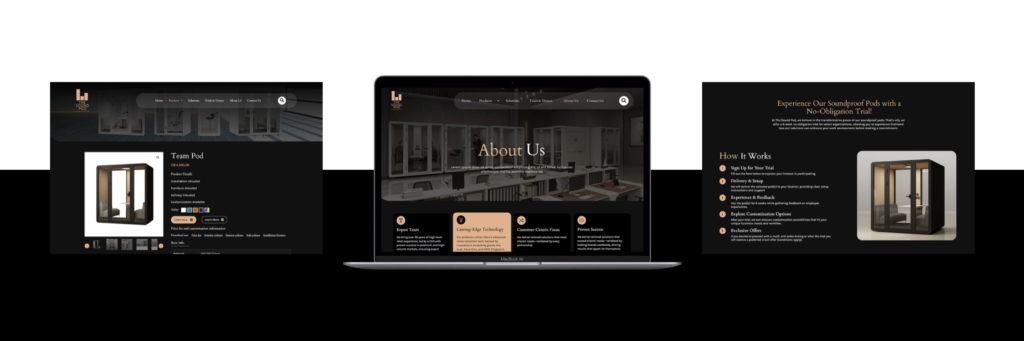
For the Sound Pod, Digilite focused on creating a digital experience designed around the brand’s audience and business goals.
The project demonstrates how thoughtful website strategy, design, and development can help businesses create stronger online experiences.
Creating a Stronger Online Presence for Don Stoddart

Don Stoddart’s project shows how a professional digital presence can better communicate expertise and improve how customers interact with a brand online.
Supporting Britespan Building Systems with Digital Growth
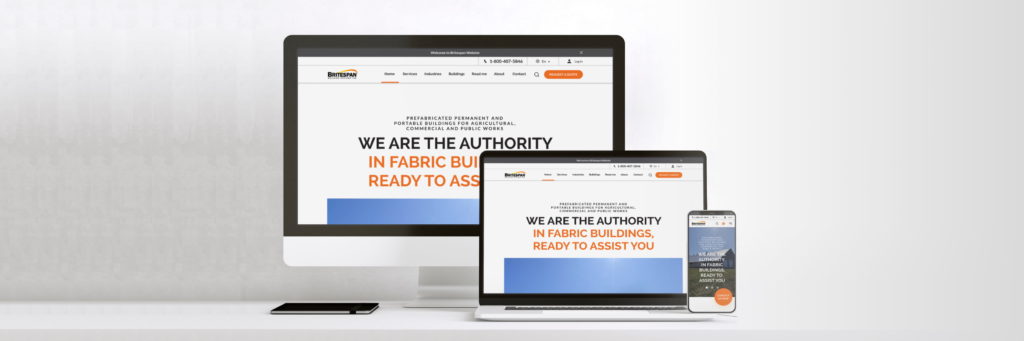
Britespan Building Systems required a digital solution aligned with a complex business offering.
The project highlights how strategic design, content, and digital experiences can help businesses communicate value more effectively.
Ready to Build a Website That Supports Your Business Goals?
A successful website requires more than good design. It requires strategy, technology, and a clear understanding of your customers.
Digilite helps businesses create websites that combine design, development, SEO, and digital strategy to generate measurable results.
Start your website project with Digilite today. Get a Quote
Frequently Asked Questions About the Web Design Process
1. What are the steps in the web design process?
The main web design steps include planning, research, information architecture, content creation, visual design, development, testing, launch, and maintenance.
2. What is the difference between web design and web development?
Web design focuses on the appearance, layout, and user experience of a website. Web development focuses on building the functionality and technical structure behind the website.
3. Why is the website design process important?
A structured website design process helps businesses create websites that are easier to use, better aligned with customer needs, optimized for search engines, and more likely to generate conversions.
4. How does SEO fit into the web design process?
SEO should be considered from the beginning of the process. Website structure, content, page speed, and technical decisions all influence search visibility.
5. Should I redesign my existing website?
A redesign may be beneficial if your website is outdated, difficult to use, slow, not mobile-friendly, or no longer supports your business goals.