

Did you know that 59% of Google searches now result in zero clicks? Even more shocking, 77% of mobile searches don’t lead to a click! With only 36% of searches driving traffic to external sites, SEO has never been more crucial to getting your brand noticed.
Remember when dominating Google’s search results felt like the ultimate win? Things have changed fast. You have probably noticed a new box at the top of some Google results. It looks like a short “answer” with a few websites listed as sources underneath. That box is Google’s AI Overview. It is reshaping how people find information. This isn’t just a tweak; it’s a total game changer. Ready to adapt?
In this blog, we’re diving into Google’s AI Overview, exploring why old-school SEO isn’t enough, and pinpointing what you need to do to appear in Google’s AI Overview. Also, we’ll share a real success story of how we at Digilite did that!
What is Google’s AI Overview?
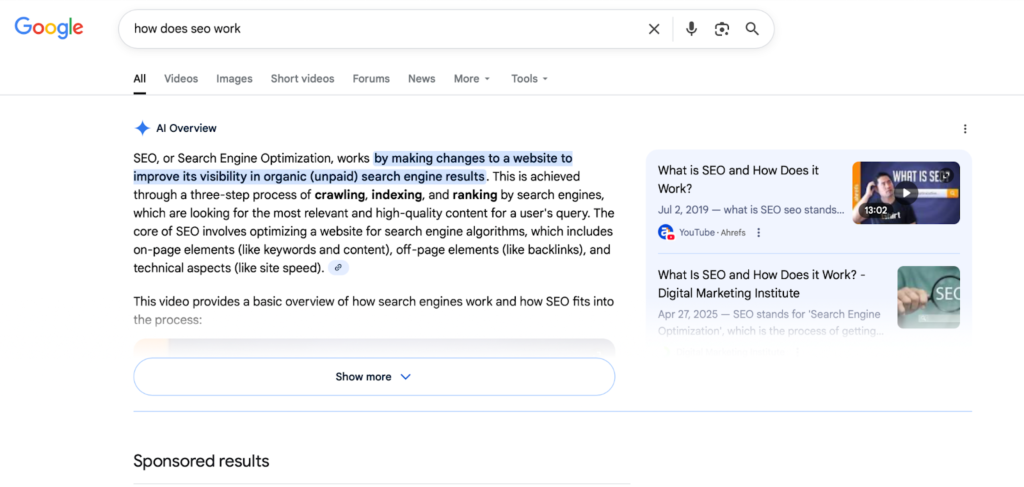
Google’s AI Overview is like a super-smart summary that pops up first in search results. It is also sometimes referred to as “position zero.” Using AI and natural language processing (NLP), it pulls info from all over the web to give users quick, detailed answers.
Instead of just a list of links, Google AI Overview gives you a curated answer, often with key facts and suggestions for learning more. It is available in more than 40 languages and 200+ countries. Basically, people can often get their answer without even clicking a website. The AI finds the best response using the data it has.
Why should you care? If your site isn’t in that AI-generated summary, you’re losing traffic and visibility. When an AI Overview appears, users click on traditional search results much less often than before. This presents a challenge for website managers and digital marketers, as users who come across an AI overview are less likely to click on the links. In fact, a study by Ahrefs revealed a 34.5% decrease in click-through rates for top-ranking results when an AI Overview is present. Being on top of regular search is still good, but being in the AI Overview makes you a go-to source and seriously boosts your brand. To rank in Google’s AI Overview is super important, maybe even more than old-school SEO.
See below the screenshot from Google showing how AI overviews appear.
What Are the Different Query Types in AI Overviews?
AI Overviews tailor their responses based on the type of query, making it crucial for marketers to grasp how various search intents influence the results displayed. Broadly, these queries can be grouped into several types:
- Informational Queries: Users are looking for answers or explanations (e.g., “how to boost website traffic”). AI overviews often provide concise summaries, steps, or key points.
- Commercial Queries: These reflect a user’s research stage before making a purchase decision (e.g., “top project management software for teams”). AI Overviews might show product comparisons or highlight brands.
- Branded Queries: When users search for a specific brand (e.g., “best SEO agency in Toronto”), AI Overviews typically feature authoritative sites or reviews from trusted sources.
- Local Queries: For searches like “restaurants near me,” AI Overviews pull in local data, including Google Maps and nearby business listings.
- Your Money, Your Life (YMYL) Queries: These involve sensitive topics such as health, finance, or legal advice (e.g., “how to improve credit score”). Google applies stricter E-E-A-T (Experience, Expertise, Authoritativeness, and Trustworthiness) guidelines to ensure the information is accurate and safe.
Why Traditional SEO Alone Isn’t Enough Anymore
For ages, companies have focused on classic SEO stuff: keywords, backlinks, site speed, and mobile-friendliness. These still matter, but they’re not enough to guarantee visibility with AI search.
Traditional SEO is about hitting specific keywords to rank high in a list of results. But Google AI Overview wants to understand what someone’s really asking and give a complete answer. That means ditching keyword stuffing and focusing on amazing content that addresses the user’s needs.
Think of it this way: AI is trained on massive datasets and sees patterns we miss. To appear in AI search, your content has to be more than just optimized; it needs to be crazy informative, trustworthy, and formatted so AI can easily get it.
If your SEO knowledge is basic, here is the simple picture:
- Before: You tried to rank on page one so people would click your link.
- Now: You still want to rank on page one, but you also want to appear in AI search by being selected as a source inside the AI Overview.
Top Actions Needed to Appear in the AI Overview
So, how do you rank in AI Overviews? Here’s what you need to do:
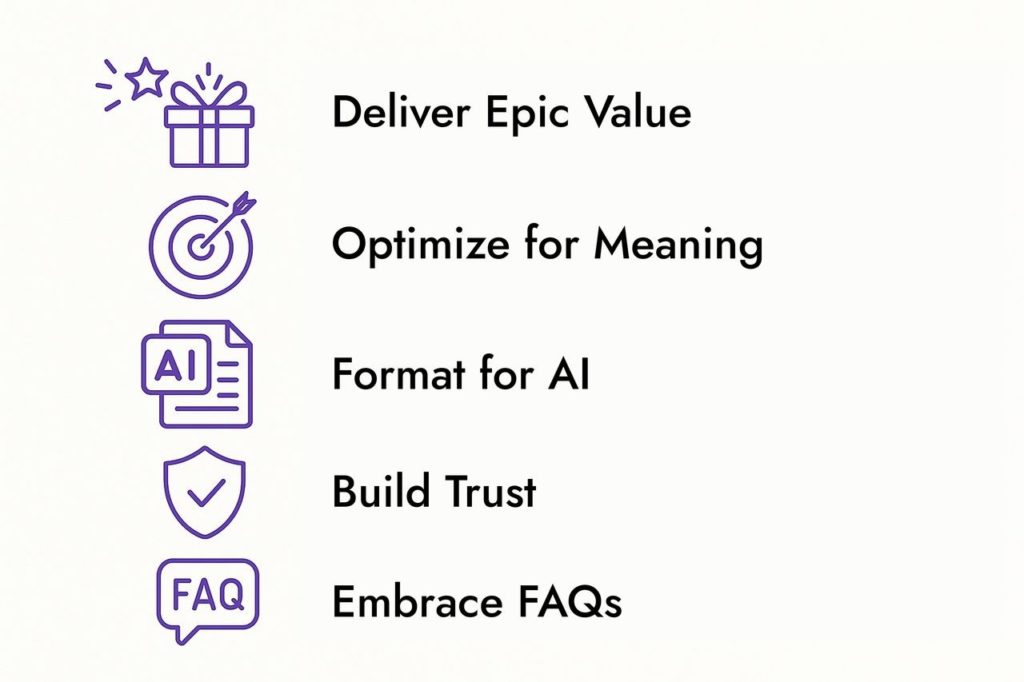
- Deliver Epic Value: Create content that’s super detailed, well-researched, and answers common questions in your industry. Try to be the resource for your niche. Give complete answers, cover related questions, and add insights that nobody else has. By focusing on value, you’ll boost your chances of ranking in Google AI Overviews.
- Optimize for Meaning: Go beyond basic keywords. Get how words relate to each other and use natural language processing (NLP) to optimize your content for true meaning. For example, instead of just saying “AI-driven customer service tools,” talk about the benefits, use cases, and how they integrate.
- Format for AI: Use clear headings, subheadings, bullet points, and lists to make your content easy for AI to scan. Use schema markup to give context: what type of content it is, who wrote it, and when it was published. Think about the questions your audience asks and structure your content as a Q&A. This clear structure will help you get found in AI search results.
- Build Trust: Make sure your website is secure, mobile-friendly, and loads fast. Get backlinks from respected sources in your industry. Share your content on social media and other channels. The more trustworthy your site looks, the better your chances of getting found in AI search results. It will also boost your brand’s reputation.
- Embrace FAQs: Create a detailed FAQ section on your website that answers common questions related to your industry. Use schema markup to help AI understand the context of the information. The better your answers, the better your chances of appearing in AI search results.
Step-by-Step: How to Rank in AI Overviews
Here is a beginner-friendly roadmap you can follow.
Step 1: Find topics where AI Overviews show up
Search your key topics in Google and see which queries already trigger AI Overviews. Make a list of:
- Phrases like “how to rank in AI overview” and “how to rank in Google AI overviews.”
- Complex how-to questions tied to your services
- Questions your sales team or clients often ask
These are your “AI Overview” opportunities.
Step 2: Write for people, structure for AI
For each important topic, create or improve a main guide page.
Use this simple structure:
- Direct answer at the top
In the first two or three sentences, directly answer the main question. For example:
“To show up in Google’s AI Overview, you need high-quality content that answers specific questions, strong on-page SEO, and a website that is fast and easy to understand for both users and search engines.” - Clear headings that match searches
Add headings such as- “How to rank in AI overviews for small businesses.”
- “How to rank in Google AI overviews for B2B marketers.”
- “How to get found in AI search results with SEO and PPC together.”
- Short paragraphs and logical sections
Avoid walls of text. Keep paragraphs short and focused on one idea. - FAQ section
At the end of the page, add frequently asked questions like- “Can I appear in an AI search if my site is new?”
- “Do I need to pay to appear in Google AI search?”
Step 3: Improve E-E-A-T on your key pages
To appear in the AI search and be chosen as a source, you must look trustworthy.
On your main pages, make sure you:
- Name the author and their role
- Share specific examples and numbers where possible
- Link to external, reputable references when you quote data
- Have a complete About page, Contact page, and clear policies
AI Overviews rely on high-quality data. If your content looks weak or unsafe, it is less likely to be referenced.
Step 4: Take care of technical and user experience basics
Even for beginners, there are a few simple checks:
- Your site should load quickly on mobile
- Headings should be in a logical order (H1, H2, H3)
- Important pages should be linked to from your main navigation
- Content should display well on different screen sizes
Pages that are easy to crawl and pleasant to use tend to perform better in search and are more likely to be used for AI Overviews.
Real Success Story: How ONQ Appeared in Google’s AI Overview
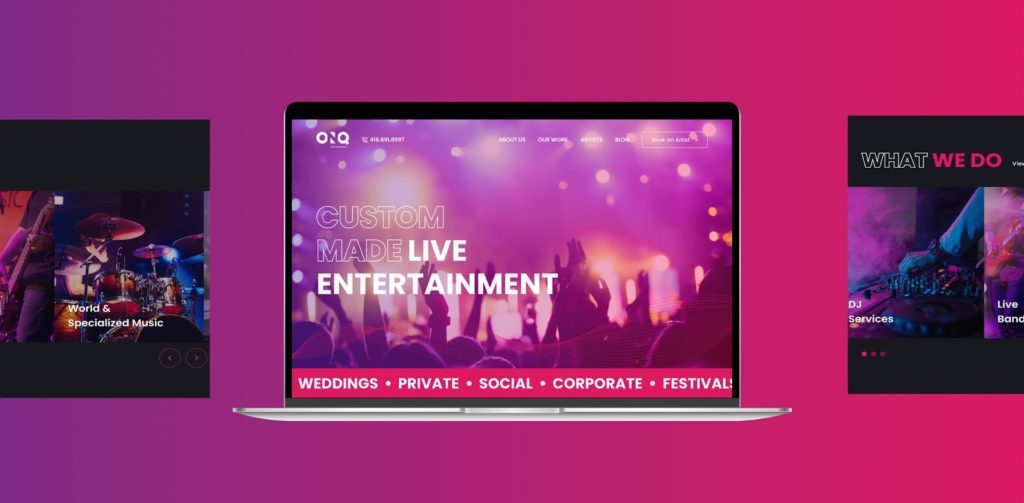
ONQ, a Canadian platform specializing in live entertainment for weddings and corporate events, faced a major challenge: despite offering top-tier talent, its website had low visibility and minimal organic traffic. But after partnering with Digilite, ONQ saw remarkable results, including a 90% organic traffic growth and, most excitingly, their article “Top 9 Most Influential Canadian Musicians and Bands” was featured in Google’s AI Overview.
The Challenge
ONQ’s website struggled with:
- Low organic visibility, ranking for only a few broad, untargeted keywords
- Minimal engagement, with content not matching user intent or search demand
- Poor conversions, as visitors weren’t guided toward bookings or inquiries
- Navigation issues, leading to high bounce rates
Our Approach
Digilite’s strategy was multi-faceted, focusing on:
- Deep business understanding to align SEO and content strategies
- Targeted keyword research based on user behaviour and niche queries like “jazz band for wedding party.”
- Content optimization, restructuring landing pages, and blogs for both users and search engines
- Improving website user-friendliness, making it easy for visitors to navigate and convert
The Result
The outcome? A 90% increase in organic traffic, improved rankings, and higher engagement. Within six months, ONQ’s article about influential Canadian musicians was selected as a source in Google’s AI Overview, helping the brand gain valuable visibility and credibility in a competitive space.
This success illustrates the power of SEO optimization and user-focused content in driving real, measurable results, helping ONQ reach its audience in an entirely new way.
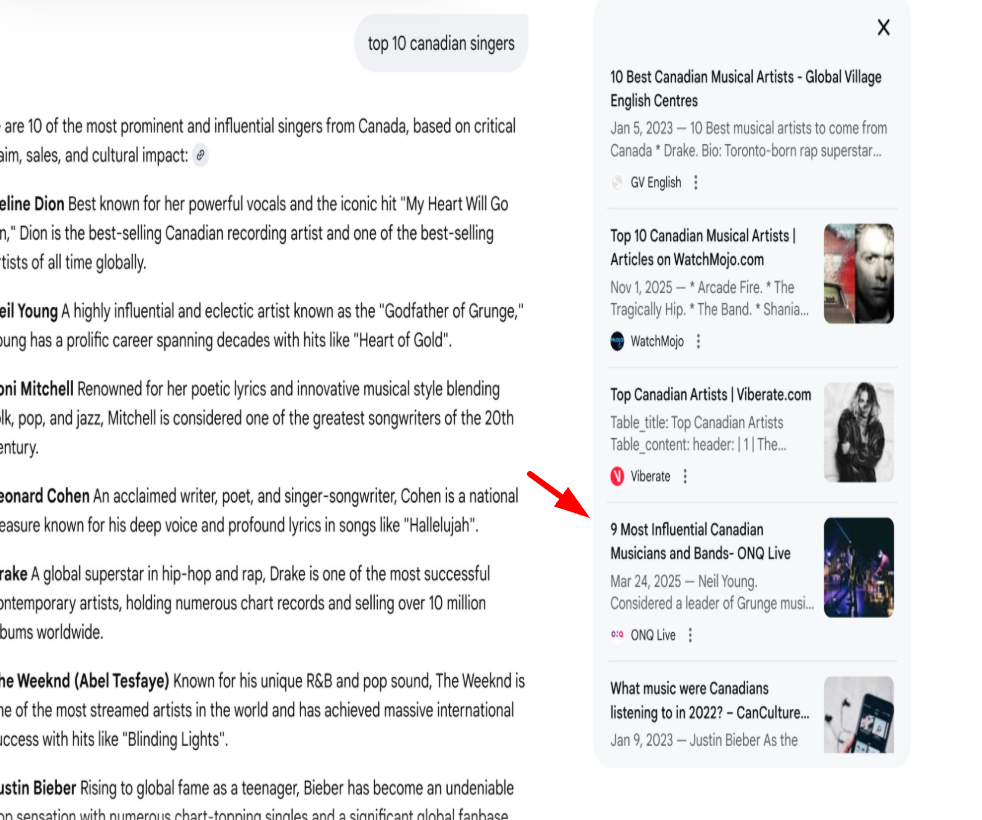
In conclusion, the rise of AI is fundamentally changing the landscape of SEO, especially with the introduction of AI Overviews in search results. As more users encounter AI-generated summaries, businesses must adapt their SEO strategies to align with this shift. Showing up in Google’s AI Overview requires more than just traditional SEO; it requires understanding how AI selects sources, focusing on content that answers specific user queries, and optimizing for user experience.
As seen with ONQ’s success, integrating AI-driven strategies, like AI for process automation and marketing, can help your brand stay visible, drive traffic, and increase conversions in this new AI-dominated search environment. Embracing these changes will ensure your business remains competitive and successfully navigates the evolving digital landscape.
If you want results similar to ONQ, contact Digilite today. Our team can help you navigate this evolving landscape and apply the right AI-powered strategies to elevate your brand and drive measurable outcomes.