

Getting leads for real estate has never been just about listings. In a market where the Canadian Real Estate Association (CREA) is tracking month-to-month swings in sales-to-new-listings ratios, and where a growing share of buyers are asking ChatGPT before they ask an agent, the strategies that generated business in 2021 aren’t the ones generating it today.
Looking for help building a complete lead generation system? Digilite provides real estate lead generation services that combine website development, search optimization, paid campaigns, and digital marketing strategies designed to attract qualified opportunities.
Here’s what’s actually generating rental leads for real estate agents in Ontario right now, and where to focus your budget next.
The 2026 Canadian Real Estate Landscape, By the Numbers
Before building a lead generation strategy, it helps to understand the market agents are competing in.
Canada’s real estate market is becoming more balanced, meaning buyers and sellers often have more time to research their options before making decisions.
Key indicators include:
51%
National sales-to-new-listings ratio in July 2026, reflecting balanced market conditions.
$661,800
National composite benchmark price in July 2026, down 3.3% year-over-year.
$756,900
Ontario composite benchmark price in July 2026, down 5.5% year-over-year.
$2,037
Average Canadian rent in July 2026, down 4% year-over-year
For agents, this means visibility matters. Consumers are comparing neighbourhood expertise, reviews, online resources, and agents before reaching out.
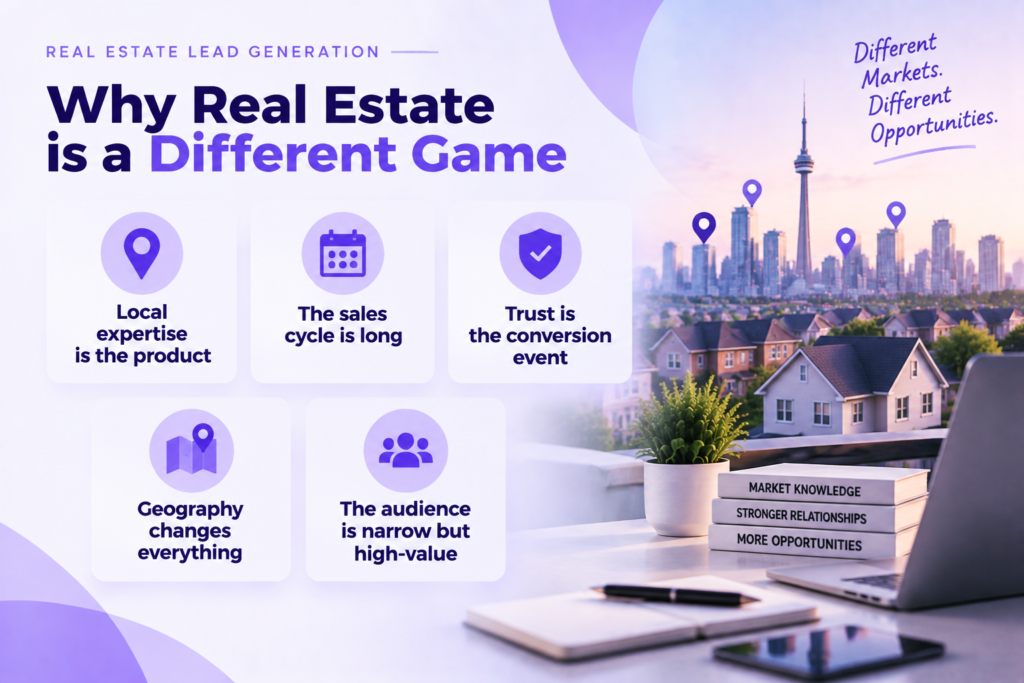
Why Real Estate Lead Generation is a Different Game
Lead generation, broadly, is the process of identifying and nurturing people who’ve shown interest in what you sell until they’re ready to act. Real estate just plays that game on hard mode:
How to Get Real Estate Leads: The Channels That Convert
Generating real estate leads today requires more than showing up on one platform. Potential buyers, sellers, and renters move between search engines, social media, websites, email, and increasingly AI-powered tools before deciding who they want to work with.
The most effective lead generation strategies combine these channels to attract attention, build trust, and turn online interactions into real conversations.
1. Build a Website That Captures Leads, Not Just Showcases Listings
Your website should be more than an online presence. It should act as a lead generation asset that works around the clock to attract and convert potential clients.
Features such as interactive property searches, neighbourhood information, mortgage calculators, market resources, and clear calls-to-action can help turn website visitors into home purchase leads.
A visitor exploring properties may not be ready to contact an agent immediately, but offering resources such as buyer guides, property alerts, or home valuation tools gives you an opportunity to capture their information and continue building the relationship.
If your website was built several years ago, it may also be worth reviewing whether it meets current expectations for speed, mobile experience, search visibility, and conversion. Digilite helps real estate businesses create custom websites focused on user experience, lead generation, and growth through our real estate website design and development services.
2. Get Found Through Local SEO and AI Search
The way people discover real estate professionals is changing. Buyers and sellers are no longer relying on one search method. They may search Google for a local agent, read neighbourhood guides, compare options, or ask AI tools for recommendations before deciding who to contact.
A strong online presence needs to support all of these discovery points.
Local SEO: Capture People Actively Searching
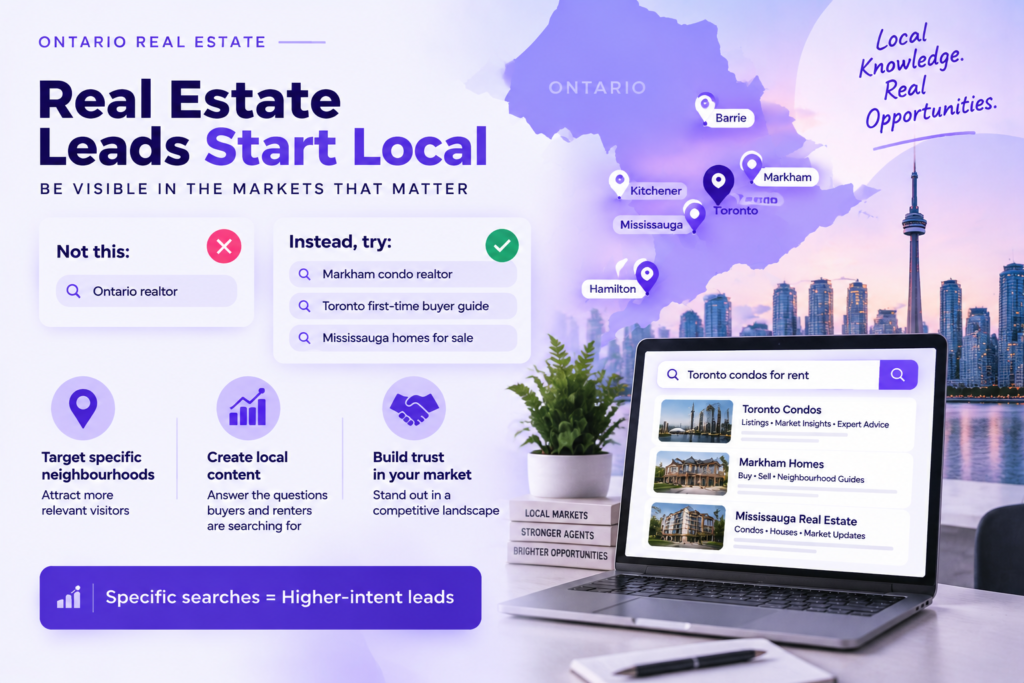
Local SEO helps real estate professionals appear when potential clients search for services in specific locations.
Examples:
- “homes for sale in Toronto”
- “top realtor in Vaughan”
- “real estate agent near me”
- “Markham condo realtor”
These searches show stronger intent because the person is already looking for information or professional help.
To improve local visibility, focus on:
- Location-specific service pages
- Neighbourhood guides
- Local market updates
- Buyer and seller resources
- Google Business Profile optimization
- Helpful content that answers common questions
For example, someone searching “best neighbourhoods in Toronto for families” may not be ready to contact an agent today, but becoming a trusted source of information can help you become their first choice later.
AI Search: Become Part of the Conversation
Search behaviour is also expanding beyond traditional search engines. More consumers are using AI tools such as ChatGPT, Gemini, and Perplexity to research questions, compare options, and discover recommendations.
Real estate searches are becoming more conversational:
- “Who are the best real estate agents in Toronto?”
- “Which neighbourhoods are best for first-time buyers in Ontario?”
- “What should I know before buying a condo in Vancouver?”
This creates a new opportunity for agents and brokerages that consistently publish clear, trustworthy, and useful information.
This is where Generative Engine Optimization (GEO) becomes important. GEO focuses on structuring your website content, local pages, and digital presence so AI platforms can better understand your expertise and connect your content with relevant searches.
GEO does not replace SEO. It builds on it. A strong SEO foundation helps search engines understand your website, while GEO prepares your content for the way people are increasingly discovering information through AI-powered search. Learn more about how AI is changing online discovery in our guide on agentic search: how AI agents are changing online discovery.
4. Use PPC Campaigns to Reach Target Audiences
Paid advertising allows real estate professionals to reach specific audiences and generate opportunities faster than waiting for organic visibility to grow.
Google Ads can help capture people actively searching for services such as:
- “realtor near me”
- “homes for sale in Ontario”
- “sell my house in Toronto”
Meanwhile, platforms like Facebook and Instagram allow agents to reach potential buyers, sellers, renters, and investors based on location, interests, and behaviour.
Successful campaigns require more than simply boosting an advertisement. They need:
- Clear messaging
- The right audience targeting
- Dedicated landing pages
- Conversion tracking
- A strong follow-up process
Digilite applied this approach with Big City Realty, combining digital marketing strategies to strengthen the brokerage’s online presence and generate targeted opportunities.
Digi-Tip: Connect lead forms directly with your CRM using tools like Zapier so inquiries are organized immediately and can be followed up with quickly.
To understand how paid campaigns fit into your overall strategy, explore PPC advertising and social media marketing.
5. Use CRM and Email Marketing to Nurture Leads Until They Are Ready
Real estate decisions rarely happen overnight. Someone searching for homes today may not purchase for months, while a homeowner requesting a property valuation may not be ready to sell immediately.
A CRM helps real estate professionals organize leads, track conversations, and create a consistent follow-up process throughout the buying, selling, or renting journey.
Instead of sending the same message to everyone, segment contacts based on their goals:
- First-time buyers looking for guidance
- Investors searching for opportunities
- Renters exploring available properties
- Homeowners considering selling
This allows you to deliver more relevant communication, such as:
- New listings that match their interests
- Local market updates
- Buyer and seller resources
- Neighbourhood insights
- Property opportunities
Email marketing plays an important role in keeping these relationships active. Not every person who visits your website or submits a form is ready to make a decision immediately, but regular, useful communication helps your brand stay top-of-mind when they are ready.
Digi-Tip: Connect your CRM with automated workflows, so leads receive timely responses, follow-ups, and relevant information even when you are busy with showings, meetings, or negotiations.
AI-powered customer service tools and workflow automation can also help real estate businesses respond faster, manage inquiries, and create a smoother client experience.
Building a Brand for Real Estate Lead Generation in Ontario

Every lead generation channel works better when it is supported by a brand people recognize and trust.
For real estate professionals, branding is not only about visual identity. It is also about demonstrating expertise and creating confidence before someone reaches out.
A strong real estate brand should:
- Showcase local expertise through neighbourhood guides, market updates, social content, and educational resources.
- Build trust through consistency by maintaining a professional website, active online presence, and clear communication.
- Use testimonials and reviews to show previous client experiences.
- Create a recognizable identity that helps you stand out in a competitive market.
If your brand no longer reflects your growth, Digilite helps businesses strengthen their identity through branding services.
Real Estate Lead Generation Success Stories
Digilite has helped real estate and related financial businesses improve their digital presence through website development, SEO, paid advertising, and content strategies.
The Spring Team
The Spring Team, a Toronto-based real estate company serving buyers, sellers, and renters, partnered with Digilite to create a stronger digital experience.
The project included:
- Brand development
- Website design
- User experience improvements
- SEO implementation
The goal was to make it easier for users to explore properties and connect with the team.
Big City Realty
Big City Realty, a Markham-based brokerage, worked with Digilite to strengthen its online presence through:
- Website development
- SEO
- Social media marketing
- Paid advertising
The strategy focused on improving visibility and reaching relevant audiences in a competitive real estate market.
Ready to Build a Real Estate Lead Generation System?
Your future clients are already searching for properties, market information, and trusted professionals online.
Digilite helps real estate businesses build digital systems that attract and convert buyers, sellers, and renters through websites, SEO, paid advertising, automation, and content strategies.
FAQs
1. How do real estate agents get leads in Canada?
Real estate agents generate leads through a combination of websites, SEO, paid advertising, social media, email marketing, referrals, and relationship-building strategies. The most effective approach depends on the market, target audience, and business goals.
2. What is the best way to generate real estate leads in Ontario?
There is no single strategy that works for every agent. Many successful campaigns combine local SEO, targeted advertising, useful content, and a website designed to capture inquiries from buyers, sellers, and renters.
3. How much does it cost to generate a real estate lead?
The cost depends on the channel, location, competition, and campaign strategy. Paid advertising may generate inquiries faster, while SEO and content marketing require more time but can create long-term visibility.
4. How can I get rental leads as a real estate agent?
Rental leads can be generated through rental-focused landing pages, local SEO, social advertising, property content, and fast follow-up systems that make it easy for renters to connect with you.
5. Is SEO or social media better for real estate lead generation?
Both channels serve different purposes. SEO helps capture people actively searching for information, while social media can help build awareness and reach targeted audiences. Many successful real estate marketing strategies combine both.
6. How is AI changing real estate lead generation?
AI is changing how people search for information and discover businesses. Real estate professionals can prepare by creating clear, helpful content and maintaining a strong online presence that helps search engines and AI platforms understand their expertise.