
![Jewellery Branding Mistakes to Avoid [updated 2026]](https://digilite.ca/wp-content/uploads/2021/06/Dos-and-Donts-web.jpg)
Whether you run a small jewellery studio, a growing online store, or an established retail shop, standing out in today’s jewellery market is not easy.
Your customers are not only comparing you with nearby stores anymore. They are seeing Cartier campaigns on Instagram, Tiffany & Co. red carpet moments, Pandora’s lab-grown diamond collections, TikTok jewellery hauls, Pinterest trend boards, and AI-powered product recommendations before they ever land on your website.
The good news is that smaller and mid-sized jewellery brands do not need to copy luxury houses to compete with them. They need something more useful: a clear identity, a better digital experience, and a brand story that customers can remember.
The jewellery market is still growing, with projections that the worldwide jewellery market could reach almost $579 billion by 2033. But growth also brings more competition, which means branding can no longer be treated as “just a logo” or “just packaging.” It has to shape how people discover, trust, and remember your business.
Mistake #1: Building a Brand That Looks Like Everyone Else
Black, gold, serif fonts, diamond icons, and minimal product shots have become the default look for many jewellery brands. These elements can look elegant, but when every brand uses the same visual language, customers have a harder time remembering who is who.
What to do instead:
Create a brand code that belongs to you. This can include a distinct colour palette, a recognizable photography style, a signature packaging detail, a recurring shape, a unique tone of voice, or a consistent way of presenting your pieces.
Quick brand check:
Cover your logo on your website and Instagram feed. Would people still recognize your brand? If the answer is no, your identity may need stronger visual cues.
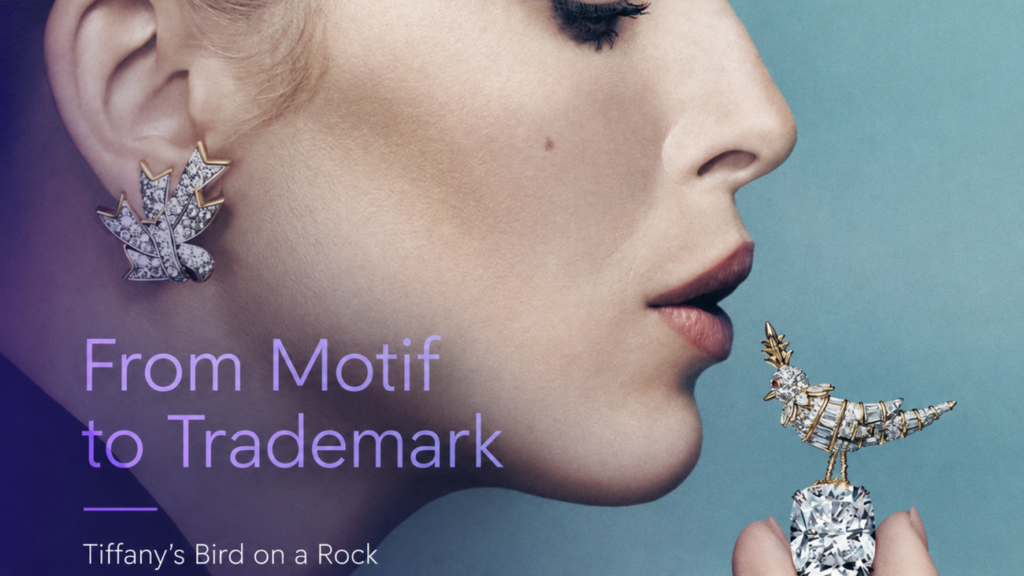
Tiffany & Co. is one of the strongest examples of why brand recognition matters. For decades, the brand’s robin’s-egg blue packaging has worked as one of its most recognizable brand assets. More recently, Tiffany has also treated its Bird on a Rock motif as more than a decorative design. In 2026, The Fashion Law reported that Tiffany secured a U.S. trademark registration for the three-dimensional stylized bird configuration used on jewellery brooches and watches, showing how a visual motif can become a source-identifying brand asset.
Mistake #2: Treating the Logo as the Whole Brand
A professional logo matters, but it is only one part of the brand. Jewellery customers are buying emotion, trust, style, craftsmanship, and meaning. A logo alone cannot carry all of that.
Your brand should answer questions like the following:
- What kind of customer are we speaking to?
- Are our pieces romantic, bold, minimal, playful, traditional, modern, or symbolic?
- What feeling should the buyer have when they open the box?
- What makes our jewellery worth remembering?
What to do instead:
Build a simple brand foundation before redesigning anything:
- Your promise: what customers can expect from you
- Your audience: who your jewellery is really for
- Your style: how your brand should look and sound
- Your proof: why people should trust you
- Your experience: how customers feel from discovery to delivery
A logo becomes much stronger when it sits inside a complete brand system.
Pandora is a strong example of a brand built around meaning and self-expression. The company describes its jewellery as pieces that allow people to share stories and passions, and it sells in more than 100 countries through 7,000 points of sale. Its “Diamonds for All” campaign also reframed lab-grown diamonds as jewellery for everyday personal meaning, not only once-in-a-lifetime occasions.

Mistake #3: Showing Products Without a Story
Plain product images are useful, but they are rarely enough. Customers want to see how a necklace sits on the body, how earrings move, how a ring looks in natural light, and what kind of lifestyle the piece belongs to.
This is especially important for younger shoppers.
What to do instead:
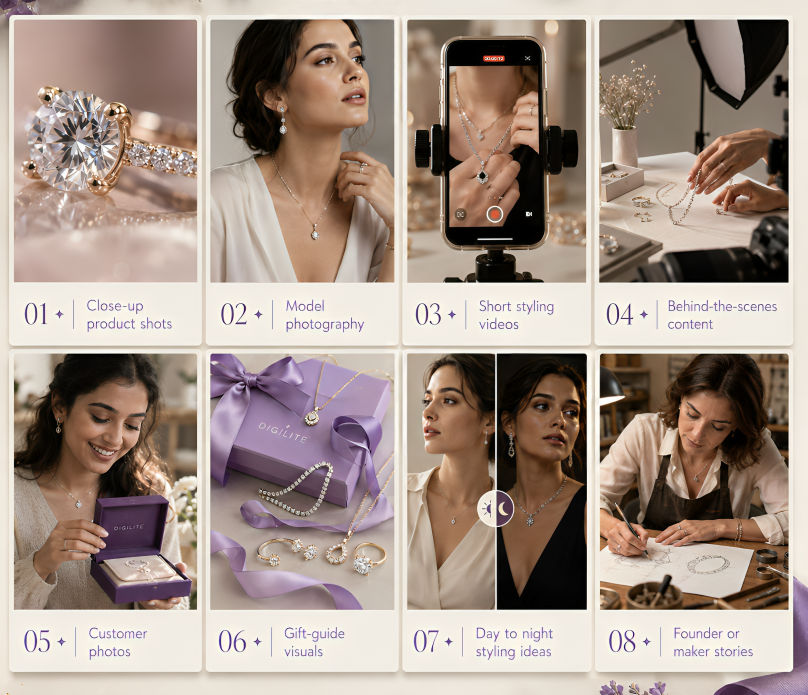
Show jewellery in context. Use a mix of:
- Close-up product shots
- Model photography
- Short styling videos
- Behind-the-scenes content
- Customer photos
- Gift-guide visuals
- “Day to night” styling ideas
- Founder or maker stories
This does not mean every image needs to be expensive or editorial. It means every piece should feel real, wearable, and connected to a moment.
Example:
Instead of posting “Gold hoop earrings,” show “Three ways to wear gold hoops this week: work, dinner, weekend.” The product stays the same, but the story becomes easier to imagine.
Mistake #4: Ignoring Culture and Community
Jewellery marketing is becoming more connected to culture. Brands are using music, film, fashion, celebrity styling, and creator partnerships to reach audiences more emotionally.
Damiani’s latest “Icons” campaign is a strong example of how luxury brands use consistency to build recognition. The Italian jeweller brings back Stray Kids’ I.N alongside supermodel Mariacarla Boscono, continuing the same refined campaign world rather than starting from scratch. Shot in richly decorated Italian palazzos with frescoed walls, antique furniture, and elegant floral details, the visuals connect modern celebrity influence with Damiani’s heritage, craftsmanship, and timeless Italian style. By pairing familiar ambassadors with specific collections like Belle Époque Reel, Mimosa, and Margherita Bloom, Damiani turns the campaign into more than a beautiful image. It becomes a clear brand-building system.
Tiffany & Co. has also leaned into cinematic storytelling. Its 2026 campaign film with Natalie Portman focuses on different facets of love and inner strength, using Tiffany’s iconic collections as emotional symbols rather than simple product placements.
What to do instead:
Smaller jewellery brands can build culture without celebrity budgets. Try:
- Collaborating with local stylists, bridal creators, or fashion photographers
- Creating seasonal jewellery edits around real events
- Partnering with local cafés, florists, wedding planners, or boutiques
- Sharing customer proposal, anniversary, or self-gift stories
- Creating content series around styling, care, gifting, or symbolism
The goal is not to look famous. The goal is to make your brand feel present in your customer’s world.
Mistake #5: Using Packaging as an Afterthought
Packaging is not just a box. It is part of the customer experience.
A customer might forget the checkout page, but they will remember the first time they open the package. This is even more important for jewellery because the product is often emotional: a gift, an engagement piece, a celebration, a milestone, or a personal reward.
What to do instead:
Create packaging that supports your brand identity. That can include:
- A custom box or pouch
- A branded polishing cloth
- A care card
- A handwritten thank-you note
- A jewellery story card
- A gift-ready insert
- Sustainable or reusable materials
The packaging should feel intentional, not generic. It does not need to be overly expensive, but it should feel considered.
Mistake #6: Not Proving Trust Online
Jewellery is a high-trust purchase. Customers want to know what they are buying, who they are buying from, and whether the brand is reliable.
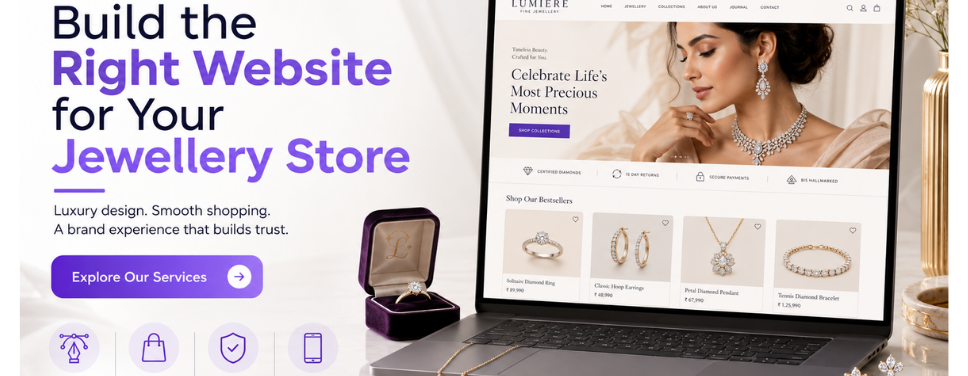
This is where many jewellery websites fall short. Beautiful visuals are important, but they must be supported by clear product information, strong website structure, reviews, policies, and fast performance.
That was one of the key challenges in our work with Berani Jewellers, a retail store specializing in branded watches and jewellery. Their website had low-content pages, inconsistent structure, metadata issues, orphaned pages, and speed-related problems. These issues affected both visibility and user experience.
Digilite started with a detailed website audit, then created a tailored SEO plan focused on website structure, keyword optimization, content improvements, technical fixes, and page performance. Within two months, Berani’s website traffic increased by 153%, organic rankings expanded, and visitors had a smoother browsing experience.
The lesson is simple: branding and SEO are connected. A jewellery brand can look beautiful, but if users cannot find it, navigate it, or trust the information, the brand experience breaks.
Mistake #7: Forgetting AI Search and Product Discovery
In 2026, customers are not only searching on Google or scrolling social media. They are also discovering products through AI-powered tools.
OpenAI introduced richer shopping experiences in ChatGPT in March 2026, allowing users to browse products visually, compare options side by side, upload images for inspiration, and refine results through conversation. Google’s AI Mode shopping experience also brings together Gemini capabilities with Google’s Shopping Graph, which includes more than 50 billion product listings with details such as reviews, prices, colours, and availability.
For jewellery brands, this means your product data matters more than ever. AI tools need clear information to understand what you sell and when to recommend it.
What to do instead:
One of the jewellery branding ideas is to make sure your jewellery website includes the following:
- Clear product titles
- Detailed product descriptions
- Material, stone, size, and care details
- High-quality product images
- Structured product data
- Fast-loading pages
- Helpful category copy
- Customer reviews
- Strong internal links
- Updated availability and pricing
Your jewellery brand now has to be readable by people and understandable to search engines and AI systems.
Mistake #8: Treating Sustainability as a Simple Marketing Line
Modern buyers are paying closer attention to sourcing, materials, production, and long-term value. Sustainability cannot be a vague sentence on an About page.
A 2025 academic study on the high jewellery industry found that sustainability has become a key driver in consumer decision-making, with ethical sourcing and environmentally responsible materials becoming more central to brand strategy.
What to do instead:
Be specific. Explain what your pieces are made from, where possible. Share your repair options, packaging choices, sourcing standards, or production process. If you use recycled metals, lab-grown stones, local makers, handmade production, or small-batch collections, make those proof points easy to find.
Customers do not expect every brand to be perfect. They do expect honesty.
Mistake #9: Posting Without a Content Rhythm
Random posting makes your brand easy to forget. Jewellery brands need consistent content pillars that repeat without feeling repetitive.
Pinterest’s 2026 trend report points to a wider consumer shift toward comfort, authenticity, optimism, and personal expression. It also notes that people are drawn to trends they can make their own rather than simply copy. That is highly relevant for jewellery because jewellery is one of the easiest ways people personalize their style.
What to do instead:
Build your content around repeatable themes:
- New arrivals
- Styling ideas
- Jewellery care tips
- Customer stories
- Gift guides
- Behind-the-scenes moments
- Material education
- Founder notes
- Occasion-based edits
- Trend explainers
For example, a weekly content rhythm could look like this:
- Monday: styling idea
- Wednesday: product education
- Friday: customer or founder story
- Sunday: gift/edit carousel
This keeps your brand active without making every post feel like a hard sell.
The biggest jewellery branding mistake in 2026 is thinking that a beautiful product is enough on its own.
Customers need to understand your identity, trust your website, see your jewellery in real life, connect with your story, and find you across search, social, and AI-powered discovery tools.
Famous brands like Tiffany, Pandora, and Damiani show us that strong jewellery marketing is not just about luxury. It is about recognition, emotion, consistency, and cultural relevance.
For smaller and mid-sized jewellery businesses, the opportunity is clear: do not try to look like everyone else. Build a brand that feels specific, memorable, and easy to trust.
Digilite helps jewellery and retail brands improve their branding, website experience, SEO, and digital marketing strategy. Our work with Berani Jewellers shows how the right structure, content, and technical improvements can turn a struggling website into a stronger growth channel.
FAQs
1. What makes a strong jewellery brand?
A strong jewellery brand has a clear identity, memorable visuals, consistent messaging, and a shopping experience that makes customers feel confident.
2. Why is branding important for jewellery businesses?
Jewellery is emotional and personal. Good branding helps customers understand your style, trust your business, and remember you after they leave your website or social media page.
3. Does a jewellery brand need social media marketing?
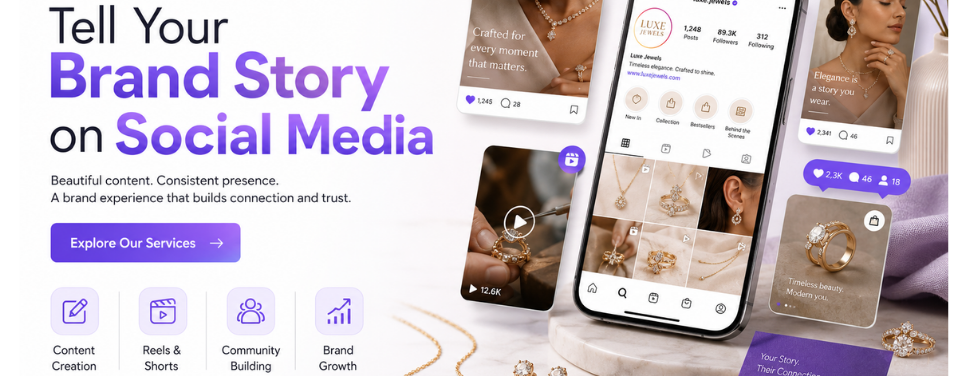
Yes. Social media helps jewellery brands show products in real life, tell stories, share styling ideas, build trust, and stay visible to potential customers.
4. Why is website design important for jewellery stores?
Your website is where interest turns into action. A clear, fast, and beautiful website helps customers explore products, understand details, and feel ready to buy.
5. How can SEO help a jewellery business?
SEO helps your jewellery brand appear when people search for products, collections, gift ideas, or local jewellery stores. It also improves website structure and user experience.
6. What should jewellery brands post online?
Jewellery brands can post close-up product shots, model photos, styling videos, customer stories, gift guides, behind-the-scenes content, and founder or maker stories.
7. How can Digilite help jewellery brands grow?
Digilite helps jewellery brands with branding, website design, SEO, social media marketing, and digital strategy built around visibility, trust, and a better customer experience.